Zone training for running is not just a buzzword, it’s one of the most effective, science-backed ways to train smarter, avoid burnout, and reach peak performance. And probably you have read about it more often as well when you look up information about running.
In this blogpost we cover:
- What heart rate zones are and how they work
- How to calculate your personal training zones
- Why training within these zones matters
- The key differences between wrist-based and chest strap heart rate monitors
- Three chest strap monitors we recommend for accurate zone-based training
1. What are heart rate zones?

Heart rate zones are specific ranges of heart rates (measured in beats per minute, BPM) that correspond to various levels of exercise intensity. These zones are typically defined as percentages of your “maximum heart rate (HRmax)”, and each one targets a different physiological benefit. For example fat burning, improving aerobic capacity, or increasing speed and power. Measuring your heart rate is also super important when you train during warm temperatures as your heart rate can easily be 10 – 15 BPM higher with high temperatures.
Here’s a breakdown of the five common heart rate training zones:
Zone 1: Recovery (50–60% of HRmax)
- Effort: Very light
- Feeling: You can talk easily; feels like a warm-up or cooldown
- Breathing: Very comfortable
- Purpose: Promotes recovery, enhances blood flow, builds base aerobic endurance. Great for warm-ups and cool-downs.
Zone 2: Aerobic/ base (60–70% of HRmax)
- Effort: Light
- Feeling: You can hold a conversation comfortably
- Breathing: Steady, so you can have full sentences
- Purpose: Builds aerobic endurance, improves fat metabolism, critical for long-distance runners (“long distance stamina”)
Zone 3: Tempo (70–80% of HRmax)
- Effort: Moderate
- Feeling: Talking becomes harder; you’re working but it is still sustainable
- Breathing: Short sentences are possible
- Purpose: Increases cardiovascular efficiency, often used for tempo runs and race pace preparations
Zone 4: Threshold (80–90% of HRmax)
- Effort: Hard
- Feeling: Talking is difficult, you’re pushing hard but not sprinting
- Breathing: Very short words only, short breaths
- Purpose: Increases lactate threshold, improves speed endurance and performance
Zone 5: VO₂ Max (90–100% of HRmax)
- Effort: Very hard
- Feeling: All-out effort; short bursts only
- Breathing: Very laboured, gasping for air
- Purpose: Builds anaerobic capacity and peak speed and power.

2. How can you determine your personal heart rate zones?

To determine your personal heart rate zones you need to start from your maximum heart rate. This is different for every individual but there are a few ways to get there
Step 1. Calculate your maximum heart rate (HRmax)
The most basic method, quick and dirty, to calculate your maximum heart rate is:
HRmax = 220 – your age
This is a rough estimate and can be off by 10-15 BPM for some individuals. For better accuracy, you can use more personalized formulas such as:
HRmax = 208 – (0.7 × age)
Still, the golden standard is a lab-based stress test or a field test (e.g., a 30-minute time trial run with average heart rate for last 20 minutes as your threshold). This is however not realistic for the day to day trainings schemes. Therefore, using the above two methods will be sufficient for our Day One training programs.
Step 2. Determine your heart rate zones
Once you have your HRmax, apply the percentage ranges to define your zones. Some runners prefer to use Lactate Threshold Heart Rate (LTHR) instead, which can provide more personalized zones. Again, this is probably a bit too extensive for our Day One training progams.
Example for a 35-year-old:
- HRmax (estimated) = 220 – 35 = 185 BPM
- Zone 1 (50–60%) = 93–111 BPM
- Zone 2 (60–70%) = 111–130 BPM
- Zone 3 (70–80%) = 130–148 BPM
- Zone 4 (80–90%) = 148–167 BPM
- Zone 5 (90–100%) = 167–185 BPM
3. Why zone training is essential
You might be wondering why you would bother with zones at all? Can’t you just “run based on how you feel”?

Sure, but running based on how you feel often leads to training in the “gray zone”, too hard for recovery, too easy for performance gains. Here’s why training by heart rate zones makes a huge difference:
- You avoid overtraining
Zone-based training forces you to slow down on easy days and push smartly on hard days. This balance reduces risk of injury and burnout.
- You build aerobic capacity
Zone 2 running, though slow, builds mitochondrial density, fat metabolism, and capillary growth which is critical for endurance.
- Track progress scientifically
Training in defined zones lets you measure improvements over time. As your aerobic fitness improves, you’ll run faster at the same heart rate. In theory anyway
- Personalized training
Your heart rate is a reflection of your personal effort level, not just the pace. On hot or humid days, or when you are just back from a long business trip or a stressful event for example, running by pace alone can overexert you while heart rate zones keep you in check. This is especially relevant when you are training in a hilly terrain.
4. Why the majority of your trainings is in zone 2
If you’re training for a long distance run or half or full marathon, most of your training (often 70% to 80%) should take place in Zone 2.

This “easy” zone might feel almost too easy, but this is where the magic happens. By spending long periods here, you train your body to use fat more efficiently as fuel, improve oxygen delivery, and build the stamina required to sustain steady effort for hours. It also promotes recovery between harder workouts, allowing consistency week over week, something that’s far more important than any single hard session. Finally, it helps your body to get used to the constant movements and landing on your feet/ ankles/ knees. For some of us this means a 90 kg landing 125+ times/ minute!
And what about the interval trainings then?
Even when training for long distance events, short, high-intensity intervals (typically performed in Zones 4 and 5) are essential to improving your overall running economy and performance ceiling.
These sessions stimulate neuromuscular adaptation, increase your VO₂ max, and help you learn to tolerate and clear lactate more efficiently. Though they might only make up 10% to 20% of your training, intervals make you a more powerful, efficient runner and allowing you to hold a faster pace more comfortably for longer distances.
Think of it this way: Zone 2 builds the engine; intervals tune it for race day performance.
Use a heart rate monitor for real-time feedback
To effectively train in zones, real-time feedback from a heart rate monitor is essential. This brings us to a key point: not all heart rate monitors are created equal
5. Chest strap vs. wrist-based heart rate monitors: Why chest straps are more accurate
Chest strap monitors, such as those from Polar, Garmin, Wahoo or many others use electrocardiogram (ECG) technology, which directly measures the electrical signals of your heartbeat.
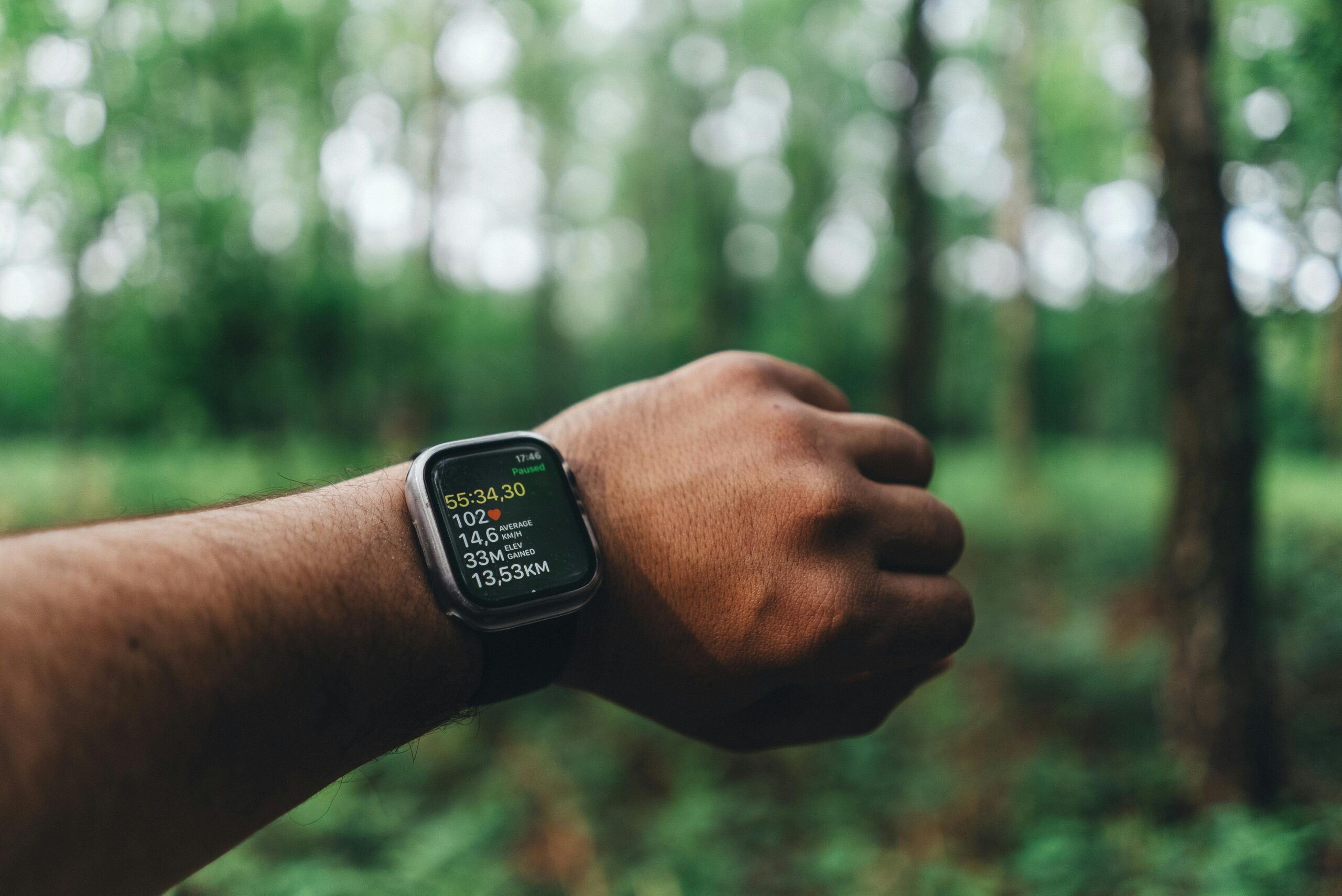
In contrast, wrist-based monitors (like the Apple Watch or Fitbit) use photoplethysmography (PPG), meaning they shine light into your skin to detect blood flow changes. While convenient, they can be thrown off by:
- Arm movement (e.g., swinging during a run)
- Skin tone or tattoos
- Cold weather (reducing blood flow to the wrist)
- Looseness of the strap
Studies consistently show that chest straps are significantly more accurate, especially during high-intensity intervals, tempo runs, and activities involving a lot of arm motion.
So, if you’re serious about zone training and don’t want misleading data, go with a chest strap. We prefer chest strap monitors as well as they are simply more accurate and therefore helps to properly set-up our trainings.
5. Top 3 Chest strap heart rate monitors for runners
So we know how important it is to measure your heart rate accurately and to stay in your zone. We have three chest strap heart rate monitors we recommend, balancing accuracy, comfort, and value. For transparency, this is all based on our own advice without any commercial links.
Polar H10
When you say “heart rate monitor”, you say Polar. It is perceived as the industry gold standard for HR accuracy. It has built-in memory and is Bluetooth & ANT+ compatible. It can record a session independently, syncs with nearly every app (Strava, Garmin, Polar Beat), and is waterproof. Personal Day One experience: Milo has used a few of these but could not get it to work properly. That is maybe on us as the reviews online are super positive. Check them out here
Garmin HRM-Pro Plus
Garmin if of course well known for their sporting accessories. This straps also tracks running dynamics (stride length, vertical oscillation), dual ANT+ and has Bluetooth with internal memory. Especially when you already have other Garmin hardware (or software) this is a great choice. With Day One, this is the preferred choice of Mees
Wahoo TICKR X (Gen 2)
Less known brand but has been Milo’s choice for years now. It is lightweight, measures cadence and running analytics, and supports Apple Watch connection as well as many other apps. It is the budget-friendly choice without sacrificing features. Check them out here: Wahoo
Final thoughts: train smart, not just hard
Zone training in combination with the right training schemes ensures that every run has a purpose, whether you’re building a base, boosting your threshold, or going all out.
While wrist-based devices like the Apple Watch are useful for casual tracking, they fall short when it comes to the accuracy needed for effective zone training. Investing in a reliable chest strap is one of the smartest moves you can make as a runner. This is not just for the runners that run half or full marathons, even when you try to run your first 5K or 10K embracing heart rate zones will help you run smarter, avoid injuries and unlock your full potential.